
The complete story of
The Clothes
Remembered
Everything
Glass Census / 1983âÂÂ2025
Four immaculate recordings. No released records.
Glass Census were the Nottingham quartet every London A&R scout claimed to have discovered in 1985, usually after somebody else had already paid their train fare. They made immaculate, wounded dance music about manners, appetite, class, and the instant when self-invention becomes self-erasure. They recorded four songs. None were released.
One damaged studio, one disputed yacht, and three suits burned behind a Nottingham Woolworths. Forty years after Glass Census vanished, their complete studio work has surfaced under the title they chose in 1985: A Private Fire. Faultline brought keyboardist Mara Quill and drummer Rory Bell back to the old lace district. Kit Mercer answered separately by fax and refused a photograph. Julian Vane sent a seven-word statement through a solicitor, then telephoned twice after midnight to correct its punctuation.
01 / Nottingham, 1983
Before London
The four people behind the immaculate surface
Julian Vane â voice, lyricist
Born Julian Vaines above his parents' curtain shop in Beeston. A scholarship boy who learned early that diction could be armour, he sang in a polished baritone that could turn suddenly thin and frightened at the top of a phrase. Onstage he was all stillness, cufflinks, and devastating eye contact. Offstage he revised every anecdote until it sounded inevitable. His great contradiction was that he wanted fame without ever being seen wanting it.
Mara Quill â synthesizers, piano, arrangements
The band's musical architect and least romantic member. Quill studied textile design, repaired cheap analogue keyboards for rent, and built arrangements like garments: silhouette first, lining last, no seam showing. She distrusted guitar heroics, sentimental key changes, and men who called expensive mistakes âÂÂinstinct.â Her clipped backing vocals are the record's moral counterweight.
Kit Mercer â fretless bass, guitar, saxophone
An ex-jazz student with a shop-window face and chronic stage fright. Mercer could make a bass part sound both decadent and accusatory. He treated every photograph as evidence against him and every chorus as a chance to escape. Friends remember him as the funniest member; none of the surviving publicity notes contain a joke.
Rory Bell â drums, percussion, rhythm programming
A former northern-soul obsessive who dragged the band's grand surfaces back toward the body. Bell combined hard acoustic snare, dry electronic claps, tuned toms, and tiny percussive jokes hidden at the edge of the mix. He owned six identical cream suits because he believed repetition made an outfit âÂÂa position.âÂÂ
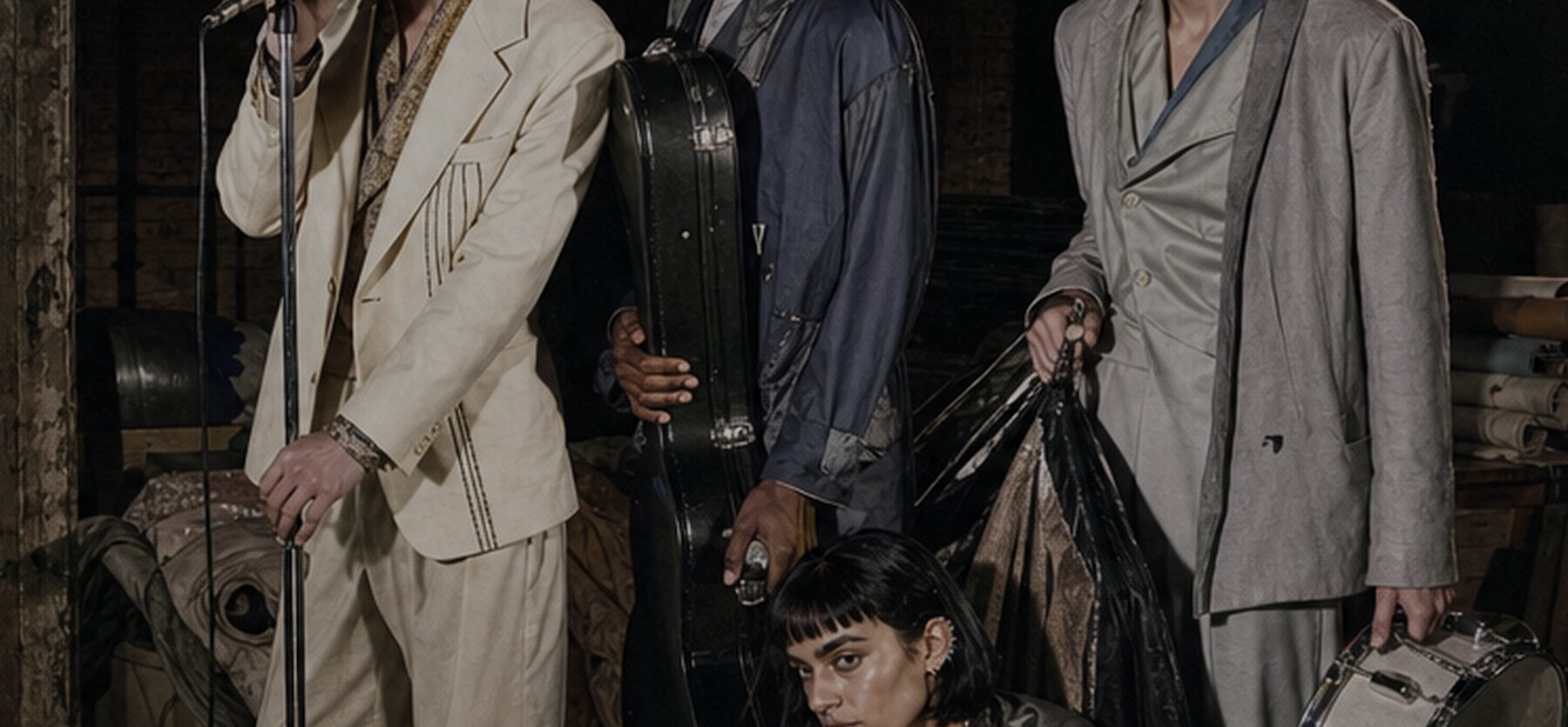
The blackout that started it
Quill met Vane at a 1983 student fashion show staged in a disused lace warehouse. The electricity failed halfway through; Vane continued announcing outfits in darkness while Quill rerouted a battery-powered sequencer through the PA. Mercer and Bell joined within two months. The name came from a damaged municipal sign outside the warehouse: GLASS â CENSUS IN PROGRESS.
They rehearsed after hours above a closed furniture showroom near Huntingdon Street. Their early performances paired disciplined pop arrangements with clothes made from deadstock suiting, curtain lining, and mirrored buttons. The visual joke was aspiration assembled from retail remnants. London misunderstood this as limitless money, which suited them.
02 / London, March + June 1985
Blue Meridian
Producer-engineer Celia Rook cut away the grandeur.
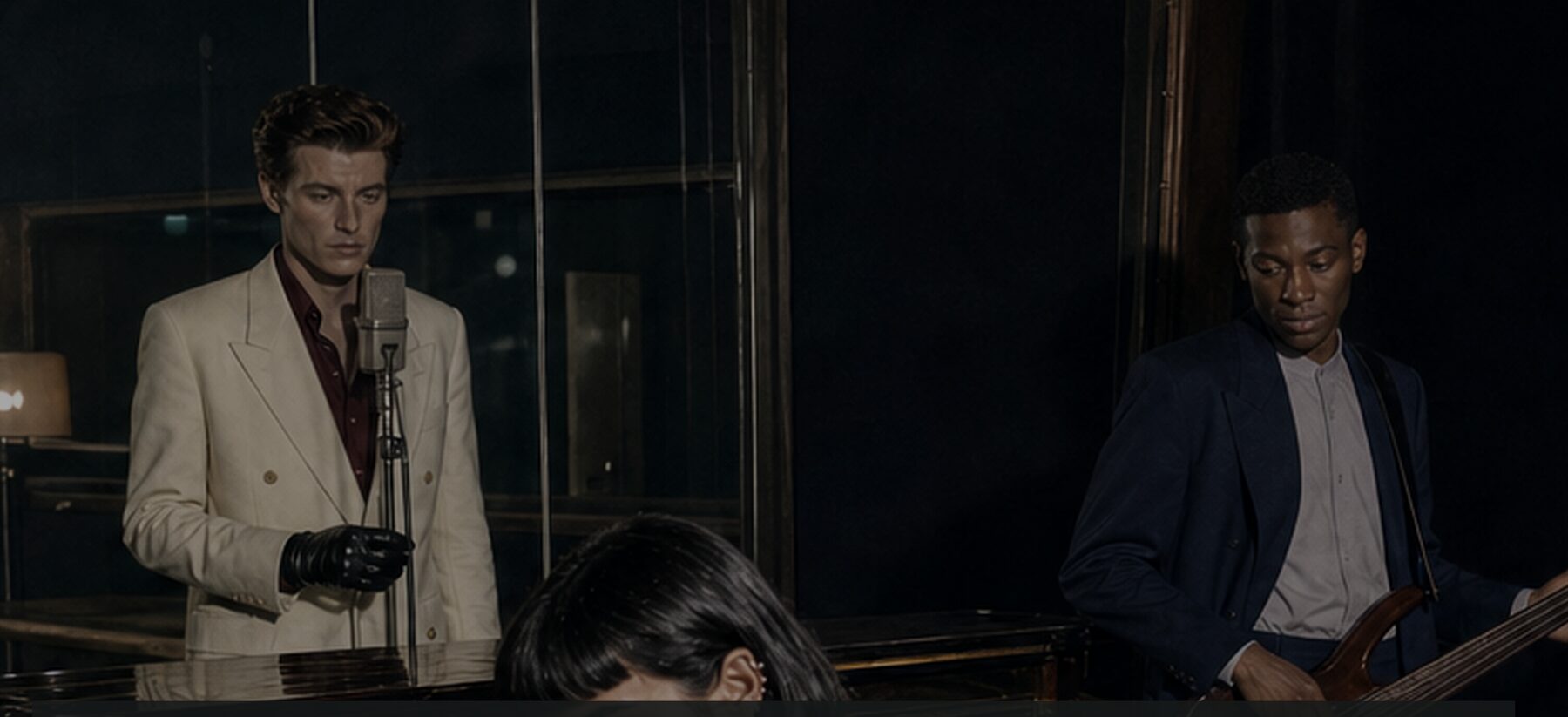
Two singles. Four sides. No test pressing.
In March and June 1985, Glass Census recorded two singles at Blue Meridian Studios in London under producer-engineer Celia Rook:
- âÂÂThe Night Has Excellent Mannersâ b/w âÂÂGlasshouse WeatherâÂÂ
- âÂÂWhite Telephoneâ b/w âÂÂA Private FireâÂÂ
The sessions were financed by the tiny prospective imprint Arc Light Domestic. Test pressings were scheduled but never cut. During an overnight electrical fault in August 1985, the studio's suppression system discharged, a water main failed, and the tape room ceiling partially collapsed. Inventory marked the Glass Census reels destroyed.
Mara, when did you believe the tapes were gone?
When Celia rang and said the tape-room ceiling was in the tape room. There are sentences you don't interrogate. We had no money for safeties. The label had no money for lunch. I remember Julian asking whether the multitracks had suffered âÂÂcosmetic damage,â which was a wonderfully Julian way of asking if our future had drowned.
I believed it two weeks earlier. The label fellow stopped returning calls. Water just gave everyone a better story.
The received story is that you were on the edge of enormous success.
Received by whom?
We were on the edge of the pavement outside every useful building in London.
People said âÂÂenormousâ because we dressed to make small rooms look inadequate. We had four songs, two train tickets, and one hotel key between us. But yesâÂÂwhen the first song started, a room changed shape. I won't pretend I didn't notice.
âÂÂThe Night Has Excellent Mannersâ sounds like a hit that already knows the audience will misunderstand it.
Good. Most hits are misunderstandings with a strong bass line.
The bass line is not âÂÂstrong.â It is anxious and overdressed. Please print that.
Printed. Who were the couple in the lyric?
Julian and whoever he needed to impress that evening. Sometimes that was another person. Usually it was the wallpaper.
We played an industry party in Kensington where the four of us took turns holding one glass of champagne. Julian noticed a waiter noticing. The next rehearsal he had the first verse.
Celia Rook's session sheet says âÂÂNO MORE GRANDEURâ in red pencil.
That was aimed at the toms.
It was aimed at Julian.
Both can be true.
03 / The four recordings
The Sound of Silence
Dance-floor momentum, dressed for the wrong room.
Musical language
- Elegant early-digital synth-pop grounded by physical drums and fretless bass
- Lacquered piano, clipped rhythm guitar, breathy saxophone used as punctuation
- Baritone lead vocal: controlled verses, suddenly exposed choruses
- Female counter-lines that puncture the narrator's vanity
- Sophisticated major/minor ambiguity; choruses that brighten harmonically while darkening lyrically
- Dance-floor momentum with a faintly provincial sense of having dressed for the wrong room
âÂÂThe heat became audible.âÂÂMara Quill on learning to leave space

âÂÂSingers regard silence as industrial action.âÂÂ
The female lines in these songs feel less like backing vocals than cross-examination.
I refused to sing âÂÂooh.â If a man is going to narrate himself into a locked room, the least a woman can do is mention the door.
âÂÂGlasshouse Weatherâ is remarkably physical: condensation, sleeves, bad air. Was that difficult to record?
Celia turned the studio heating up until Kit threatened to remove his shirt.
I threatened to invoice the studio for cleaning it.
The difficulty was leaving space. We were young. Young musicians think proof means adding another part. Celia kept muting things until the heat became audible.
Then âÂÂWhite Telephoneâ is all space.
It originally had an enormous synth figure. Very impressive. Completely wrong. The telephone is frightening because it is clean, useful, and silent. We cut holes in the chorus instead.
Julian hated the holes. Singers regard silence as industrial action.
Was there a real call he was waiting for?
There is always a real call until the song works. Then it belongs to anyone with furniture at three in the morning.
04 / AugustâÂÂOctober 1985
Water, White Trousers,
Fire

The collapse
Within weeks the deal disintegrated. During Cowes Week, Vane was injured when a tender struck the stern ladder of a chartered yacht named Leander's Smile. No reliable witness agrees on who else was aboard. One very famous contemporary frontman has always denied knowing anything, including when nobody asked him.
On 12 October 1985, Quill, Mercer, and Bell were seen burning several cream and dove-grey suits in a shopping trolley behind the Woolworths on Lister Gate. They never performed together again.

The received story
We have to discuss Cowes.
Do we?
Julian was injured boarding Leander's Smile. Stories persist about who was aboard.
Stories persist because men buy white trousers and stand near water.
I was in Nottingham. Mara was in Nottingham. Kit was in a cinema. Julian was photographed with a bandage and no explanation, which for him was a kind of album campaign.
A very famous singer has denied involvement.
Generously. We never accused him.
Nobody did.
He may deny this answer if it helps.
Julian's solicitor supplied this statement: âÂÂI remember the sea. The sea misremembers me.âÂÂ
Eight words.
The paperwork said seven.
He called later to say the full stop was essential.
There he is.
And the suits behind Woolworths?
They were ours. The trolley was already there.
We did not burn them because the band was over. We burned them because they still made us look like the band. There is a difference when you're twenty-five.
Kit?
Mine was midnight blue and did not catch properly. This has been omitted from every account and changes the symbolism considerably.
The last song predicts that scene with uncomfortable accuracy.
âÂÂA Private Fireâ was Julian's best lyric because it catches him losing control and editing the loss simultaneously. âÂÂI only meant to lose the labelâÂÂâÂÂthat was the whole band. We wanted transformation without evidence of wanting it.
05 / Derbyshire, 2025
The Reels Survived
The complete surviving studio output. Nothing added.
Rediscovery
In 2025, the four quarter-inch mix reels and the original sleeve transparencies were found inside a mislabelled BBC effects-library carton acquired at a Derbyshire house clearance. Rook's grease-pencil sequence marks matched her session sheets. The tapes were baked, transferred, and restored conservatively: dropouts repaired only where a parallel safety allowed it, no modern quantisation, no replacement performance.
The record in context
A Private Fire is not a comeback and not a reconstruction. It is the complete surviving studio output: four original 1985 mixes, first issued as a collection in 2025 with the recovered artwork designed for a proposed continental mini-album.
What the performance meant
Glass Census did not ask the audience to believe the fantasy. They asked whether the audience could afford it. Vane performed intimacy as etiquette; Quill watched the crowd as though marking coursework. Their ideal listener recognizes both the seduction and the invoice.
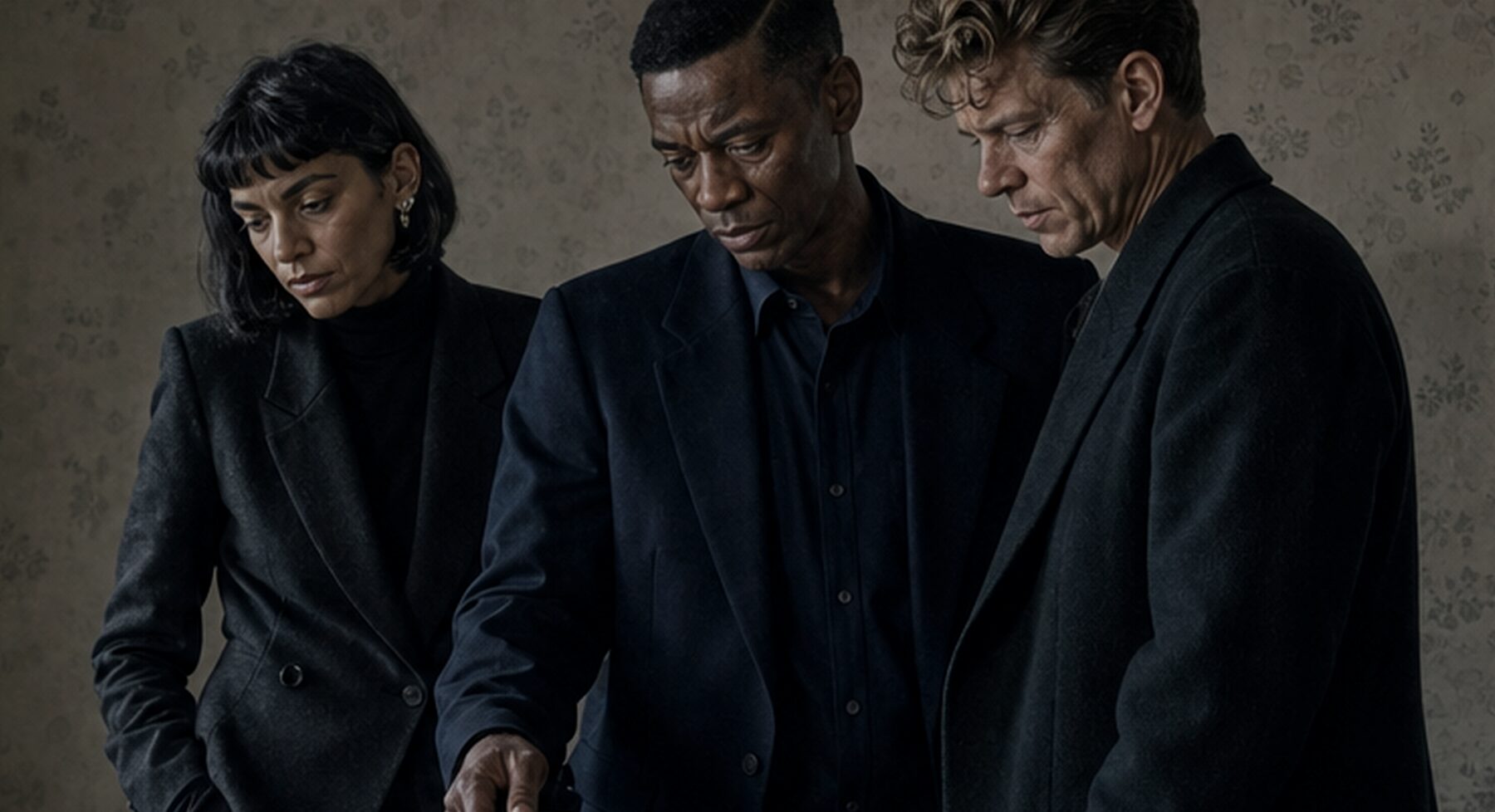
âÂÂForty years don't get a co-writing credit.âÂÂ
Did hearing the restored tapes make you mourn the career that might have followed?
For ten minutes. Then I remembered touring vans.
I mourned Celia. She died without knowing the reels survived. I don't mourn an imaginary second album. Imaginary second albums are always masterpieces and nobody has to mix them.
Why retain the original title and sleeve rather than call it The Lost Tapes?
Because we weren't trying to be lost. A Private Fire was the object we made. Forty years don't get a co-writing credit.
Is Glass Census a band again?
No.
Absolutely not.
Please define âÂÂband.âÂÂ
At 00:41 the morning after this interview, Faultline's office telephone rang twice. When answered, the line carried only room tone and what may have been a piano chord. Vane's solicitor denies that this constituted a third call.
Not a comeback.
Not a reconstruction.Four original 1985 mixes. The whole surviving story.
Faultline 47 / Archive